

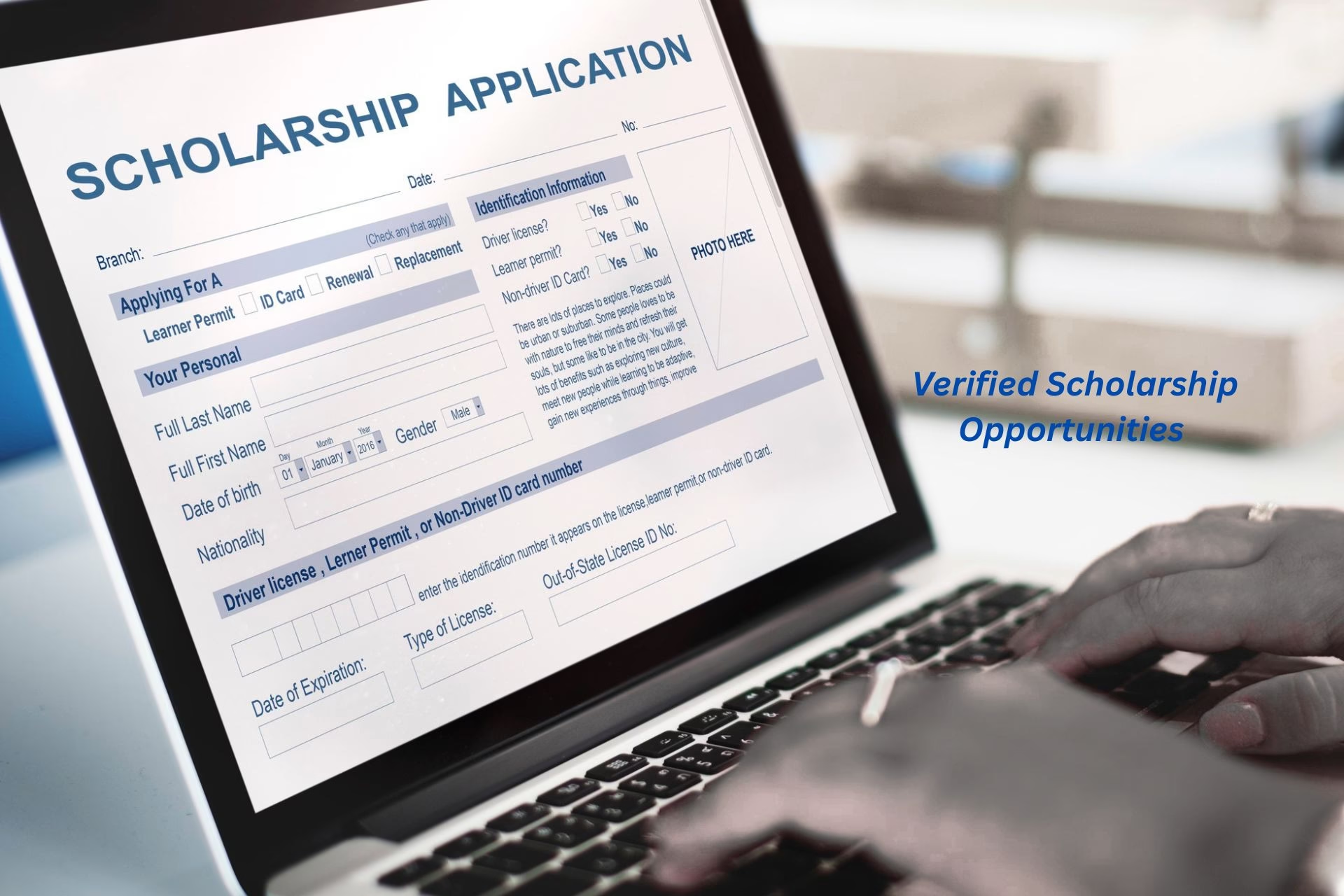
Every year, thousands of Nigerian students and young professionals dream of studying abroad on scholarship. Many of us have sat late into the night scrolling through social media posts, WhatsApp groups, or random websites. We dream of free tuition, stipends, flights, and accommodation. But there’s a harsh reality: where there is hope, there are people ready to take advantage of you.
If you have ever clicked a link promising “fully funded scholarship — pay just a little fee,” or gotten WhatsApp messages asking for passport details before even telling you the scholarship name, you know the fear of being scammed. Yet, the challenge is real: how do we separate genuine opportunities from fraud?
This guide is written with you, the Nigerian learner, in mind. It will help you confidently find real scholarship opportunities without falling for scams that drain your data, time, and money.
Understanding the Scholarship Landscape as a Nigerian
Scholarships come from governments, universities, private foundations, and international organizations. Many of the legitimate ones are advertised on official portals or through embassies. However, because there’s high demand and limited slots, scammers have hijacked the language of scholarships.
Trusting the wrong information can cost you not just money, but opportunities that you might miss while chasing false leads.
To help you, this article goes beyond general tips. You’ll get real‑life Nigerian context, common mistakes, practical steps, and honest advice that prepares you to navigate this journey realistically.
What Most Nigerians Get Wrong
Most Nigerians approach scholarship hunting like a lottery. They join 100 WhatsApp groups and expect the best offer to drop by magic. They see a post shared by an uncle, click a link, and start sending money because it says “Deadline tomorrow!”
The first mistake is thinking that scholarship information will always come on WhatsApp or Facebook. In reality, most verified opportunities are posted on official university sites, government education portals, or reputable scholarship directories.
Another wrong assumption is that paying a small fee will secure admission or scholarship. There is no legitimate scholarship that asks for money upfront to “process your application.”
Believing that all foreign scholarships are easy to get is also misleading. Many genuine opportunities are competitive and require proper preparation, strong applications, and supporting documents.
What Scholarship Committees Notice in the First 10 Seconds
Imagine you are a Nigerian applicant and a committee member opens your application. In the first 10 seconds, they notice something crucial. First, they see whether the application appears genuine and complete. They look at your name, email, and whether your application aligns with the scholarship description.
If your application looks rushed or unprofessional, they will move on quickly. They also see whether you followed instructions. Scholarship committees often give specific formats, file names, and document orders. If those are ignored, you lose credibility.
Lastly, they check if you submitted from a professional email address. A random, unprofessional email like “cooldude123” signals lack of seriousness.
These first impressions matter. They can make or break your application before they even read your personal statement.
Common Mistakes Nigerians Make
One common mistake is not verifying the source of the scholarship. If the link doesn’t end with a known domain (like .edu, .gov, or a well‑known foundation), it’s a red flag. People also fall for social media posts that show flashy dollar amounts and big logos without official verification.
Another mistake is sharing personal details too quickly. Some scam links ask for passport numbers, bank details, or Ghana card numbers for “verification.” Never submit sensitive data to unknown sites.
Many Nigerians also send the same application to every opportunity without tailoring it. Scholarship committees can tell when you copy‑paste generic essays. They want to see why you specifically deserve the award.
Also, relying on hearsay instead of official announcements is a problem. You may miss deadlines or deadlines will change and you won’t know because you’re waiting for someone to “send you details.”
Finally, failure to track deadlines carefully leads applicants to miss them entirely, only to chase fraudulent “extended deadlines.”
How to Spot a Scholarship Scam
Scams often promise easy money with little requirements. Look out for grammar mistakes, poor website design, and offers that seem too good to be true. Genuine scholarship portals usually have clear contact information, official logos, and detailed eligibility criteria.
If a website asks for payment to release scholarship funds, run away. If there’s no official partner listed, or if the scholarship name cannot be found on a government, university, or reputable nonprofit site, it’s likely fake.
Another red flag is pressure tactics. If they message you urgently, implying “limited spots” and asking you to act immediately, they are trading on urgency to bypass your judgment.
Real Story: When I Almost Got Scammed
I remember when I was applying for a master’s scholarship in 2018. I joined a WhatsApp group where someone shared a link promising full funding for Africans. The post looked real: it had a university logo and mentioned dollar figures.
I clicked, filled parts of an application form, and before I finished reading terms, the site asked me for an “application processing fee.” Something felt off, so I decided to search the scholarship name on the university’s official website. Nothing showed up.
I then contacted the university’s admissions office by email to confirm. They told me no such scholarship existed and that it was likely a scam trying to harvest personal data.
If I had paid the fee, I would have lost money and exposed my details to fraudsters. That experience taught me never to trust links without verification.
Real Story: The Right Way That Worked
A friend of mine, Ifunanya, wanted a scholarship for her PhD. She didn’t depend on random links. Instead, she spent weeks on the official scholarship section of the university she was interested in, and she subscribed to the scholarship newsletters of reputable foundations.
She also visited the embassies of countries she was targeting and attended education fairs. At those fairs, she asked questions, collected verified brochures, and got contact emails of scholarship officers.
When she applied, her personal statement was tailored to exactly what the scholarship committee was looking for. She highlighted how her background aligned with the program’s objectives. She got shortlisted and eventually awarded a fully funded scholarship.
Her success wasn’t luck. It was intentional, research‑driven, and professional.
A Practical Step‑by‑Step Strategy
Finding verified scholarships requires discipline, focus, and strategy. Below is a clear step‑by‑step plan you can follow.
Step One is identification. Start with official sources. Visit university websites you are interested in, government education portals of countries like the UK, Canada, Germany, and reputable foundations like the Mastercard Foundation or Chevening.
Step Two is verification. When you find a scholarship, verify it. Search for the scholarship name on the official site, check eligibility, and confirm deadlines.
Step Three is documentation. Organize your certificates, transcripts, passport biodata, personal statement, recommendation letters, and CV. Ensure they are up‑to‑date and professional.
Step Four is personalization. Tailor your personal statement and application to each scholarship. Avoid generic essays. Address why you deserve the award and how you plan to impact your field and home country.
Step Five is submission. Use your full name, a professional email address, and double‑check every form field before hitting submit.
Step Six is follow‑up. After submission, save confirmation emails and any reference numbers. Follow up with the scholarship office only when necessary, and always professionally.
Where to Find Verified Scholarship Opportunities
The best places to find genuine opportunities are official portals and trusted networks. University websites with .edu domains are reliable. Government scholarship boards for countries like Turkey, Malaysia, the UK, or Canada publish authentic offers.
International organizations like the United Nations, African Union, or philanthropic foundations also list awards on their official sites.
Attend education expos and webinars hosted by embassies in Lagos or Abuja. These events often bring representatives from foreign universities with real programs to offer.
Subscribe to verified newsletters. Some NGOs provide weekly updates on scholarships that are vetted before publication.
Why Nigerians Keep Falling for Scholarship Scams
Part of the reason scams succeed is desperation. When you are hungry for opportunity, a flashy Instagram post promising “100% funded scholarship” looks like a blessing. But desperation makes us skip validation steps.
Another reason is lack of awareness. Many Nigerians don’t know how to verify a scholarship or where official announcements are published.
Also, there’s a tendency to trust chain messages from friends or relatives, even when the source is unknown. That trust sometimes leads to loss of money and opportunities.
My Honest Advice
In all honesty, treat scholarship hunting like a part‑time job. Set daily time to research verified opportunities. Avoid shortcuts. Learn to distinguish between official scholarship communications and promotional chatter.
Build a network. Join student associations, follow scholarship offices on social media, and connect with past awardees. They share real insights.
Be patient with the process. Genuine scholarships take time. Prepare early, write good essays, and don’t chase every lead. Quality matters more than quantity.
If something sounds too good to be true, it probably is.
How to Use Nigerian Networks to Your Advantage
Leverage Nigerian student groups, alumni associations, and diaspora communities. Many past scholarship recipients host forums or groups where they share verified opportunities.
Don’t ignore local educational bodies. Agencies or state scholarship offices sometimes have partnerships you can tap into.
Also, talk to your lecturers and mentors. They might know about research grants that aren’t widely advertised on social media.
What to Do If You’re Unsure
If you find a scholarship but are unsure of its legitimacy, take these steps: first, check if the scholarship appears on the official website of the host institution. Then, contact that institution’s admissions or scholarship office by official email (not the chat in the portal).
Ask them to verify the opportunity. If they confirm, ask for official submission instructions.
This extra step may seem slow, but it protects you from scams and wasted effort.
Conclusion
Finding verified scholarship opportunities without falling for scams is possible, but it takes intentional effort. You must know where to look, how to verify, and how to present a strong application. Avoid shortcuts that ask for money or personal data upfront.
Scholarship hunting is not about luck. It’s about preparation, research, and discipline. Organize your time, trust only official sources, and tailor your applications to each opportunity.
If you start today with a clear strategy and keep learning, your chances of success improve immensely. Your dream scholarship is out there, but it belongs to those who pursue it the right way.
Let this guide be your map—use it wisely, stay patient, and keep applying. Your future worth investing in deserves that effort.
Final Thought
Remember that every great academic journey begins with a well‑researched and authentic application. Believe in your goals, prepare with care, and don’t let fear or scams pull you off track. The world is full of genuine opportunities waiting for Nigerians with purpose and focus. Stay determined, and your scholarship success story may soon be one others look up to. Stay committed and keep striving for excellence.